


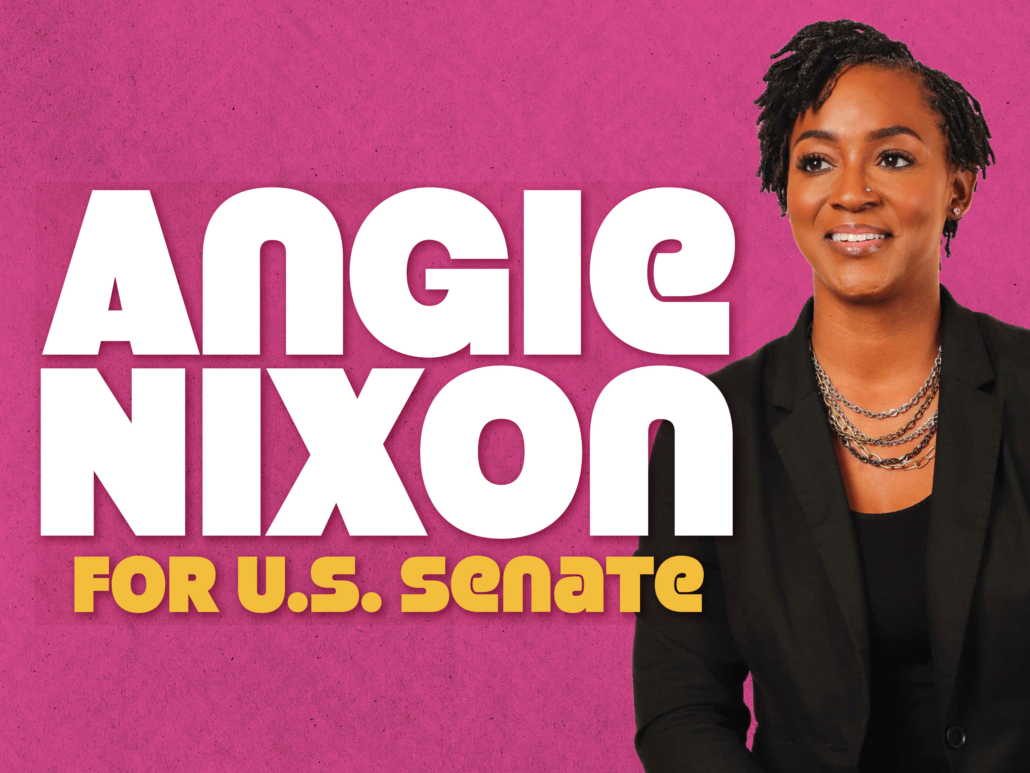
Angie Nixon on Haitian Leadership, TPS and Building Political Partnerships in South Florida
Interview by Désir | WhoIsDésir.com
With Election Day approaching, Angie Nixon spoke with Désir of WhoIsDésir.com in Little Haiti about the energy surrounding her campaign, Temporary Protected Status, concerns within South Florida’s Haitian community, and how she says Haitian leaders can work together across Florida.
The conversation moved between immigration policy and a broader question about political leadership: What happens when leaders from the same community work together instead of operating independently?
For Nixon, the answer is partnership.
Angie Nixon on the Final Weeks of the Campaign
With 32 days remaining before Election Day at the time of the interview, Nixon described herself as both tired and energized.
“The vibe is exciting. I’m a little exhausted, but I’m excited,” she said.
She pointed to community events as a source of renewed energy, particularly because of the resilience she sees among people facing difficult circumstances.
“It’s events like this that help me bring the energy back up because I’m surrounded by people who are facing terror, but they are resilient because they come from a resilient people, much like my ancestors.”
Nixon said she remained excited about the possibility of winning the election.
“And so I’m super excited about the opportunity to actually win this thing.”
The comments provide a snapshot of the final stretch of a political campaign, where exhaustion and momentum can exist at the same time.
TPS Remains a Major Concern for South Florida’s Haitian Community
One of the central issues discussed during the interview was Temporary Protected Status, commonly known as TPS.
TPS is particularly significant to Haitian communities in South Florida because immigration policy can directly affect families, workers and community members whose ability to remain and work in the United States depends on their immigration status.
When asked about her opponent Ashley Moody’s position on TPS, Nixon sharply criticized Moody’s approach and broader political record.
Nixon characterized Moody as disconnected from the concerns of Haitian immigrants and working families and argued that Moody’s policies favor wealthy interests and large corporations.
Those statements represent Nixon’s political characterization of her opponent and should be understood as such unless independently verified through public records.
For readers, the larger issue is the policy question behind the political disagreement: what should happen to Haitians who currently depend on TPS protections?
.
Advertisement
A Story About a Haitian Nurse
Nixon also described a conversation she said she had with a Haitian woman who works as an emergency-room nurse.
According to Nixon, the woman had lost her TPS status and stopped working while waiting to determine what would happen next.
Nixon used the story to illustrate what she views as the human consequences of immigration policy.
The interview transcript does not provide enough information to independently establish the woman’s identity, immigration documentation, employment status or the details of her case.
Those details should therefore be independently verified before publication.
The story nevertheless illustrates why immigration policy is not simply a Washington issue for South Florida communities. Immigration decisions can reach directly into hospitals, workplaces, families and neighborhoods.
Nixon Says Haitian Leaders Need to Work Together
The conversation then shifted from immigration policy to Haitian political leadership.
Désir asked Nixon how she would collaborate with other Haitian politicians in South Florida and build upon their collective leadership.
Nixon said she would continue developing relationships with other leaders.
“Yeah, I would continuously work with them,” she said.
She emphasized the importance of partnerships across the political landscape.
“It’s important to have great partnerships all up and down, um, the ballot and, and all up and down the, the state.”
That idea became one of the clearest themes of the interview.
Rather than describing political leadership as an individual effort, Nixon framed it as something that can involve relationships between candidates, elected officials, community leaders and residents.
Building an Advisory Structure Around the Community
Nixon also discussed an advisory structure that she said includes regular citizens and immigrants.
“And also like that advisory committee is also comprised of just regular citizens, right?”
She added that people who are immigrants could also be part of that community conversation.
Her comments point toward a broader approach to political engagement: creating opportunities for people affected by government policy to participate in discussions about that policy.
Nixon connected this approach to her own experience working alongside immigrant communities.
“I’ve worked alongside the immigrant community for nearly two decades now here in the state of Florida.”
That biographical claim should be verified through authoritative sources before being presented as an independently established fact.
Nixon’s Position on TPS and Immigration Reform
Nixon said she would support extending TPS and pursuing a broader approach to immigration reform.
“I’m excited and, uh, looking forward to voting to extend TPS, but then creating a clear pathway to citizenship for, uh, TPS holders as well as just the overall, um, you know, really reforming immigration period here in the country.”
This represents Nixon’s stated political position during the interview.
The distinction matters. A candidate’s proposed policy is different from existing law, and readers should not interpret a campaign promise as a description of current federal immigration policy.
What This Interview Reveals About Political Leadership
Three themes stood out from the conversation.
1. Immigration Policy Is Also a Local Community Issue
Although TPS and immigration are federal policy matters, Nixon’s comments focused on their impact on people living and working in South Florida.
The interview connected immigration policy to healthcare workers, families and local communities.
2. Haitian Political Leadership Is Becoming an Important Conversation
The discussion also highlighted the growing importance of relationships among Haitian leaders and organizations across South Florida.
Nixon’s emphasis was not simply on individual political success. She described partnerships across the ballot and throughout the state as important.
3. Community Input Can Become Part of Political Leadership
Nixon’s comments about including citizens and immigrants in an advisory structure suggest another model of political engagement: bringing community members into the conversation rather than limiting political strategy to candidates and campaign professionals.
Whether that approach succeeds depends on how those structures are actually organized and used.
My personal thoughts:
“Founders of color are still getting slept on.. (Désir, founder of WhoIsDésir®)
Angie-Nixon-for-U.S.-Senate-Color-V2
The Campaign Lesson: Build the Network, Not Just the Candidate
There is also a campaign-management lesson underneath the political conversation.
A modern campaign is rarely just one candidate speaking to voters.
It can involve:
- Volunteers
- Community organizations
- Local leaders
- Political candidates
- Advisors
- Media
- Grassroots organizers
- Donors
- Neighborhood networks
That makes communication and organization increasingly important.
For campaigns conducting community events and political interviews, practical equipment can also make a difference.
Campaign Media Equipment
A campaign producing interviews may need:
- A reliable smartphone or camera
- Wireless microphones
- Tripods
- Portable lighting
- External storage
- Portable battery packs
- Laptop or tablet
- Mobile internet
These tools are not endorsements of any candidate. They are practical resources for candidates, campaign teams and independent political media organizations producing interviews and community content.
Affiliate opportunity: Compare campaign interview microphones, portable power equipment and video accessories.
Campaign Field Equipment
For community events and grassroots organizing, teams may also need:
- Clipboards
- Portable chargers
- Pens and notebooks
- Event signage
- Name badges
- Folding tables
- Portable storage
- Weather-appropriate equipment
The appropriate equipment depends on the campaign’s size, budget and field strategy.
Affiliate opportunity: See campaign field and event supplies.
What We Learned From the Interview
The conversation between Angie Nixon and Désir ultimately returned to a simple political question: how can leaders representing communities with shared concerns work together?
Nixon’s answer emphasized partnerships.
Her comments on TPS focused on immigration policy and the experiences of Haitian immigrants.
Her discussion of political leadership focused on cooperation across the ballot.
And her comments about advisory structures pointed toward greater community participation.
The effectiveness of those ideas will ultimately depend on what happens beyond the interview and on how political leaders translate campaign promises into policy and action.
For now, the conversation provides a window into how one candidate describes the challenges facing South Florida’s Haitian community and the kind of political relationships she says she wants to build.
Key Takeaways
1. TPS remains a major political issue for Haitian communities in South Florida.
Nixon framed immigration status and TPS as issues with direct consequences for families and workers.
2. Nixon says Haitian political leaders should collaborate.
She emphasized partnerships among leaders across the ballot and throughout Florida.
3. Nixon says community members should have a voice.
Her comments about an advisory structure included citizens and immigrants.
4. Campaigns need strong communication systems.
Political campaigns increasingly depend on the ability to communicate with voters, volunteers, community leaders and media.
5. Political claims still require verification.
Statements about opponents, voting records, campaign donors, immigration cases and government actions should be independently verified before being presented as fact.
Frequently Asked Questions
What did Angie Nixon discuss in the interview?
Nixon discussed her campaign, TPS, Haitian immigrants, immigration reform and continued collaboration among Haitian political leaders in South Florida once elected.
What did Angie Nixon say about TPS?
Nixon said she supports extending TPS and creating a pathway to citizenship for TPS holders as part of broader immigration reform.
Why is TPS important to South Florida’s Haitian community?
TPS can affect whether eligible immigrants from designated countries can remain and work in the United States. The specific legal status of any individual should be verified independently.
What did Nixon say about Haitian political leadership?
Nixon said she would continue working with other leaders and emphasized partnerships across the ballot and throughout Florida.
Did Nixon discuss community participation?
Yes. She described an advisory structure that she said includes regular citizens and immigrants.
Is everything said during a political interview automatically a fact?
No. Political interviews contain a mixture of facts, opinions, interpretations, campaign claims and personal experiences. Claims should be independently verified before publication.
What equipment does a political campaign need for interviews?
Depending on the campaign, useful equipment can include cameras or smartphones, microphones, tripods, lighting, portable chargers and storage equipment.
Affiliate Disclosure
Some links on this page may be affiliate links. If you purchase a product or service through an affiliate link, WhoIsDésir.com may receive compensation at no additional cost to you.
Affiliate relationships do not determine the editorial conclusions or political coverage presented in this article.
Editorial Disclaimer
This article is based on an interview with Angie Nixon. Statements attributed to Nixon represent her comments during the interview unless independently verified and identified as factual information.
Claims concerning political opponents, voting records, campaign donors, immigration cases, government actions and other factual matters should be independently verified before publication.
This article does not constitute an endorsement of any candidate, political party or political position.
Our Services

Content Creator Bookkeeping Services
- Xero Bookkeeping Software
- Discount on tax preparation
- Tax Preparation for small businesses
We are hiring
Contribute to our media brand as an independent writer, content creator or any other special projects. Please feel free to email our team at: talent@whoisdesir.com. In the title put your name and what you are interested in doing.
Advertisement